About fabrics
Upholstery fabric
A dense fabric for covering furniture that takes rubbing every day. Here are the kinds of upholstery fabric, how to tell a good one by touch, and what a 2 to 3 m piece makes.

- From 250 g/m²weight of a usual upholstery fabric
- From 15,000rub cycles for furniture at home
- 1.4–1.5 musual width
- 2 mfor 6 chair seats or 4 cushions
How upholstery fabric differs from other fabric
Upholstery fabric is made to be rubbed: people sit and lie on it, bags and jeans brush against it. So it is denser and heavier than dress fabric, does not stretch and keeps its shape on a seat.
It often has a thin backing or coating on the reverse that keeps threads from pulling apart at seams and under staples. Many are also treated against stains and water.
Ordinary dress fabric on a sofa or chair soon wears through and sags. On furniture it only suits decorative cushions nobody sits on.
Kinds of upholstery fabric
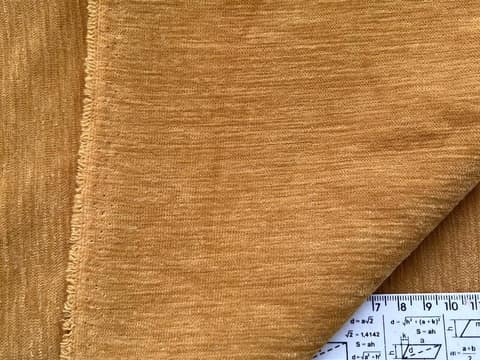
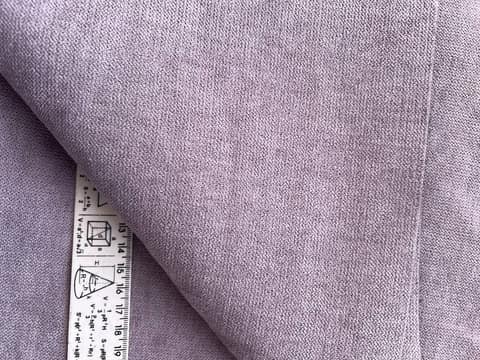
Velour and microvelour: a dense short pile, soft and warm to the touch. Practical and easy to clean; the colour shifts a little when the pile lies the other way.
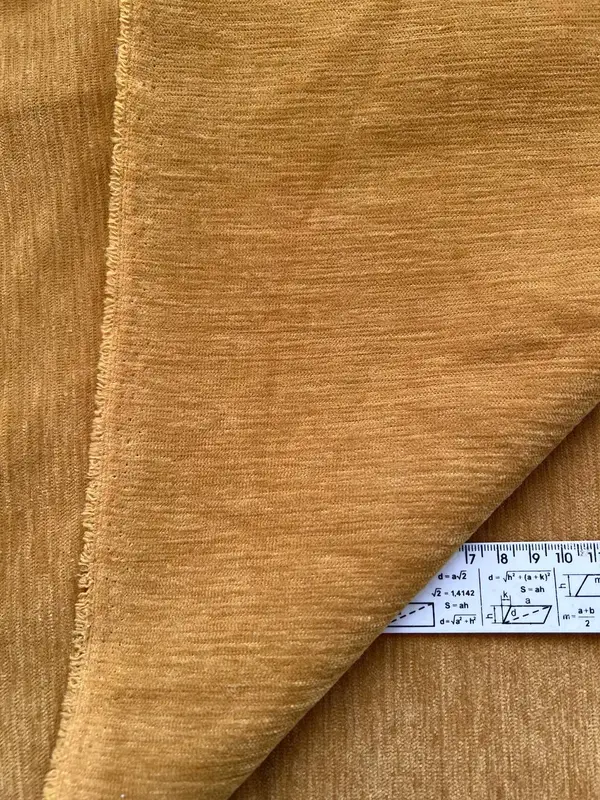
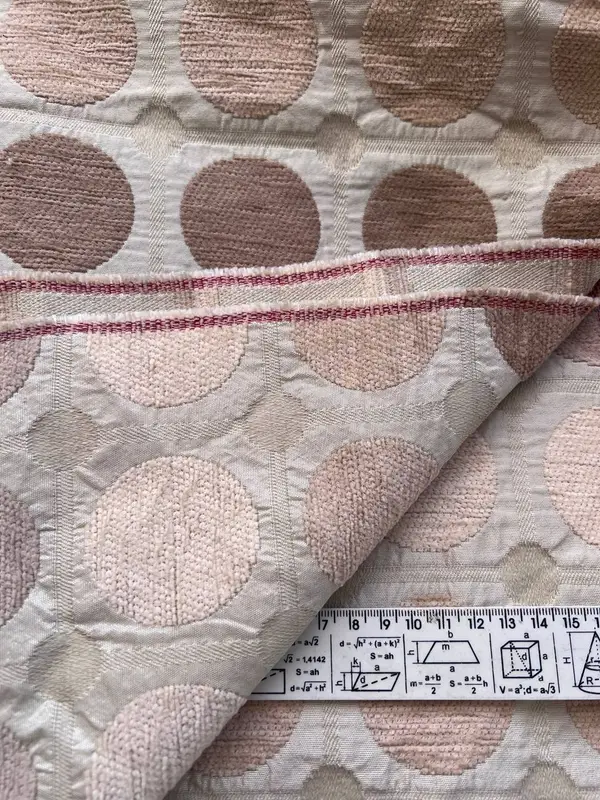
Chenille: a fluffy yarn like a caterpillar, so the fabric is soft and gently shimmers. Cosy, but its yarn snags more easily.
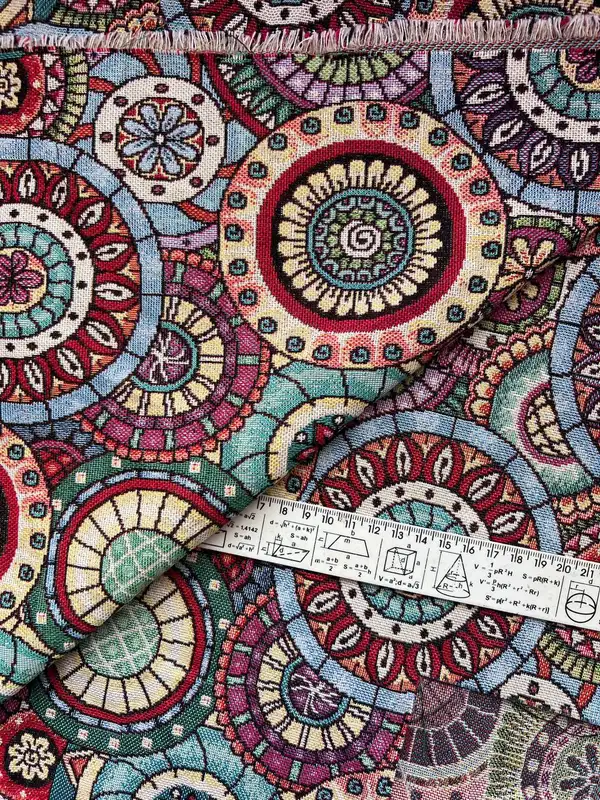
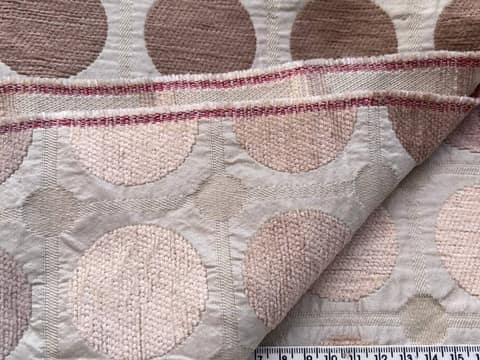
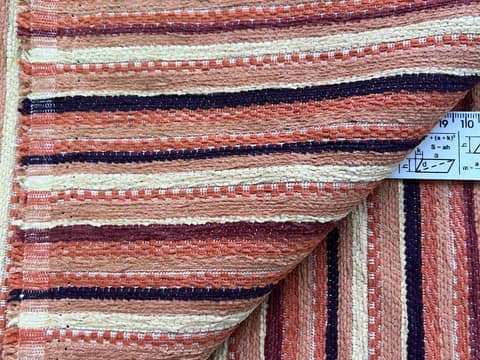
Jacquard: the pattern is woven, not printed, so it stands out and does not rub off. Tapestry: a dense woven picture, often in cotton, as in the photo at the top.
Hopsack: a rough basket weave that looks natural and is very strong. Dense cotton works too: twill, canvas, corduroy.

How to check it will not wear through
Upholstery wear is measured with the Martindale test: how many rub cycles the fabric takes before the first holes. 15,000 is enough for chairs and armchairs at home; for a sofa used every day take 25,000 or more.
Pieces rarely carry that number, so check by touch. Hold it to the light: a good upholstery fabric barely lets light through. Pull it on the diagonal: it should not stretch much.
Rub it with your palm: the pile should not shed and the threads should not shift. Look at the reverse: a tight weave or a thin backing there is a good sign.

With cats or children at home
Smooth, dense, short-pile fabrics such as microvelour hold up best: claws have nothing to catch on, and fur comes off with a brush.
A cat soon pulls loops in bouclé, coarse hopsack and chenille. Synthetics and coated fabrics clean up more easily; cotton tapestry breathes better but soaks up stains faster.
What a piece will make
Re-covering a whole armchair takes about 4 to 6 m of fabric, a sofa more, depending on its size. Our pieces are usually 2 to 3 m, and they make smaller things that still stand out in a room.
Chair seats: four 40 × 40 cm seats take 1.25 m at 1.45 m wide; how to work it out is in «How to reupholster a chair». A pouffe, a bench, an armchair seat or cushions: a 45 × 45 cm cushion with both sides takes about 50 × 100 cm.
Also sturdy totes and bags, a beanbag cover or a throw for a bench. A large pattern looks good on simple shapes.
Care
Vacuum once a week with a soft brush: dust that settles in the fabric works like sandpaper. Brush velour along the pile.
Blot a stain at once with a tissue, do not rub. Clean from the edges to the centre so no ring is left. Wash removable covers at 30 °C on a gentle cycle and dry them flat, not on a radiator.
Bright fabrics fade in the sun: cover an armchair by the window or turn it out of direct sunlight.
Sources
Facts checked against these pages. The text is our own.
- Upholstery (Wikipedia)
- Velour, Ukrainian Wikipedia
- Tapestry, Ukrainian Wikipedia
- Chenille fabric (Wikipedia)
Updated 1 November 2026
Questions
Which upholstery fabric is the most practical?
Microvelour and dense synthetic jacquard: they take rubbing, do not mind stains and are easy to clean. For chairs and armchairs take a fabric of 15,000 Martindale cycles or more.
Which fabric for an armchair if you have a cat?
A smooth, dense, short-pile fabric such as microvelour. Looped fabrics, chenille and coarse hopsack soon get covered in pulls.
Can you sew with upholstery fabric?
Yes: cushions, covers, totes and bags come out sturdy. For clothes it is usually too heavy and stiff, apart from a waistcoat.
Upholstery fabrics in the shop now
See all- Бавовна меблеваМеблева · A005050.90 m × 1.00 m · 100 UAH/m100 UAHfor the whole piece
- Синтетика меблеваМеблева · A002571.50 m × 2.30 m · 150 UAH/m345 UAHfor the whole piece
- Синтетика меблеваМеблева · A002361.40 m × 2.00 m · 150 UAH/m300 UAHfor the whole piece
- Синтетика меблеваМеблева · A002271.45 m × 2.95 m · 150 UAH/m443 UAHfor the whole piece
- Бавовна з домішками меблеваМеблева · A0018161.45 m × 3.00 m · 150 UAH/m450 UAHfor the whole piece





Upholstery fabric
See every piece in stock, or call us if you would like advice.