About fabrics
Coating wool
A dense, warm wool cloth for coats, capes and roomy jackets. Here is what kinds there are, how to choose a piece and how much of it you need.

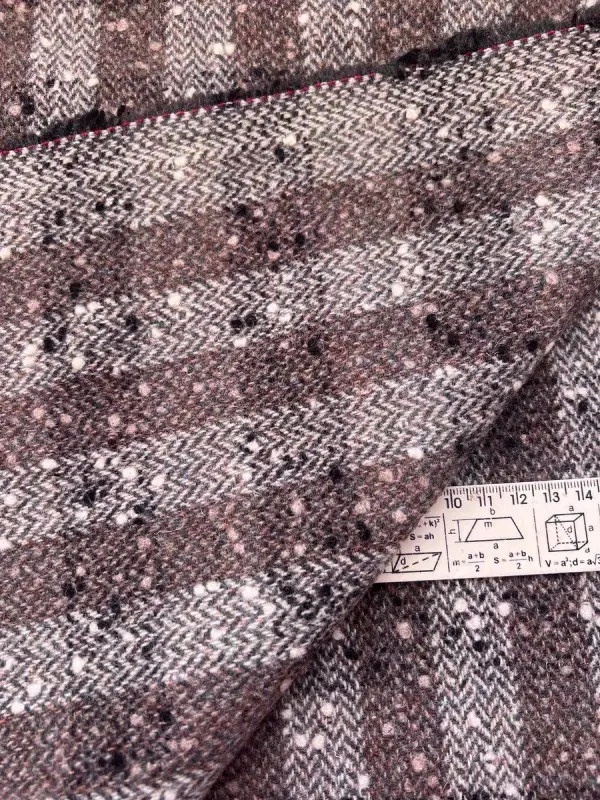
- 400–800 g/m²usual weight of coating cloth
- 2–3.5 mfor a coat at 1.5 m wide
- 140–160 cmtypical width
- Dry cleanbest care for a finished coat
What coating wool is
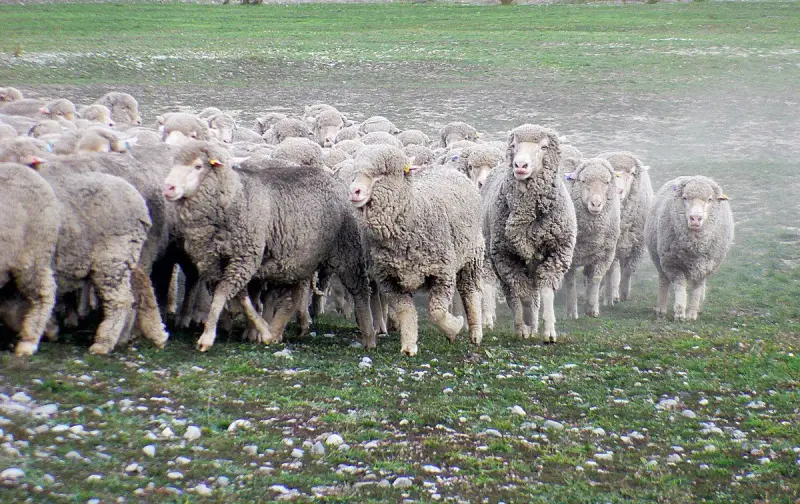
The name covers thick, dense wool cloths that hold warmth and shape. They are made of sheep wool, often with some cashmere, mohair or alpaca, and sometimes with polyamide or polyester for strength.
Coating cloth is usually fulled after weaving: the fibres mat together, the surface closes up and the cloth hardly lets wind through. That is why its edge often does not fray, and a piece is clearly heavier than suiting wool.

Kinds of coating cloth
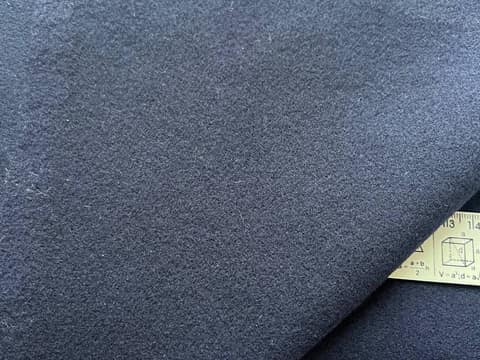
Broadcloth: dense and smooth, with a thick nap that hides the weave. The classic for formal coats.
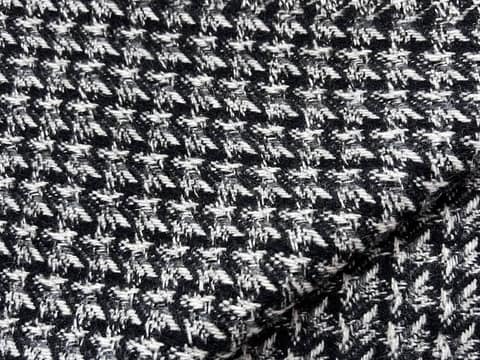
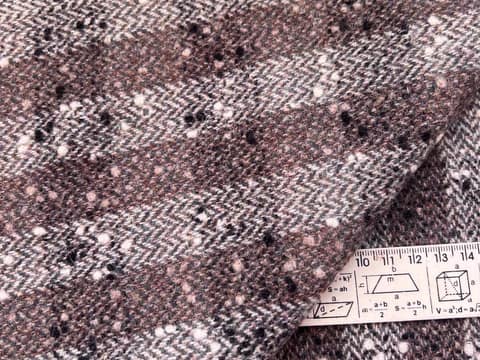
Tweed: rougher, with flecks of coloured yarn, often in herringbone or check. A warm cloth for everyday coats and jackets.
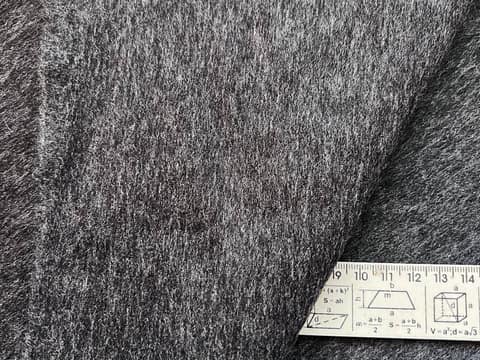
Pile and bouclé cloths: a long soft pile or little loops on the surface. Fluffy to look at, good for roomy and short styles.
Choosing a piece
Look at the density: the thicker and denser the cloth, the warmer the coat, and the heavier. A lighter cloth suits spring and autumn, a denser one winter, with insulation under the lining.
Mind the nap. Napped cloth is cut so the nap runs the same way on every part, or the parts will look like different shades. That takes extra fabric.
Herringbone or check needs extra too: the pattern has to match at the seams. Add 10 to 20 % to the usual amount.
How much fabric a coat takes
At 1.5 m wide a short coat or jacket usually takes 2 to 2.5 m, a knee-length coat 2.5 to 3 m, a long one 3 to 3.5 m. Wide sleeves, a hood or a big collar add another 0.3 to 0.5 m.
Every piece in our shop is sold whole, with its exact width and length, so compare the size with your pattern before you reserve. How to work it out for your own style is in the article «How much fabric a coat takes».
How to check it is wool
The simplest way: burn a few threads from the edge over a sink. Wool burns slowly, goes out by itself, smells of burnt hair and leaves a brittle ash that crumbles between the fingers. Synthetics melt and set into a hard bead that smells of plastic.
If you find both ash and hard beads, it is a wool blend. Such cloth is often stronger and creases less than pure wool. Every way to check is in the article «How to tell wool from synthetics».
Care
Before cutting, decatise the coating wool: steam it through a damp cotton cloth and let it dry flat. That way it will not shrink in the finished coat.
A finished coat is best dry cleaned. Between wears, brush it, hang it on broad hangers and never iron wool directly: it leaves shiny marks.
Sources
Facts checked against these pages. The text is our own.
Updated 19 October 2026
Questions
How is broadcloth different from coating wool?
Broadcloth is one kind of coating wool: a very dense fulled cloth with a thick nap. Coating wool means broadcloth, tweed and pile cloths alike.
Does a coat need a lining?
Yes. A lining protects the cloth from rubbing, lets the coat slide on easily and takes away the itch of wool.
How much coating wool does a coat need?
At 1.5 m wide: a short coat 2 to 2.5 m, knee length 2.5 to 3 m, a long coat 3 to 3.5 m. Allow extra for napped cloth and for herringbone or check.
Coating wool in the shop now
See all- Wool coatingПальтова · A002871.60 m × 0.80 m · 400 UAH/m320 UAHfor the whole piece
- Wool coatingПальтова · A0019171.60 m × 1.00 m · 400 UAH/m400 UAHfor the whole piece
- Wool coatingПальтова · A000341.60 m × 0.90 m · 400 UAH/m360 UAHfor the whole piece
- Wool coatingПальтова · A0035141.60 m × 3.00 m · 400 UAH/m1 200 UAHfor the whole piece




Coating wool
See every piece in stock, or call us if you would like advice.