About fabrics
How to reupholster a chair yourself
New fabric on the seat changes an old chair in an evening. Here is what you need, how much fabric to take and how to stretch it without wrinkles.

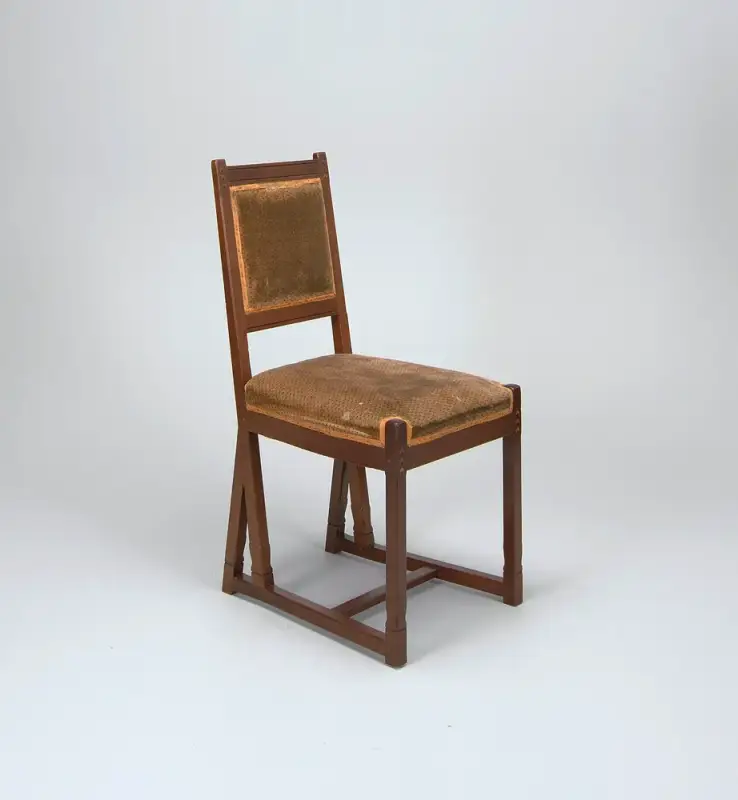
- Seat + 15 cmon each side to fold under
- 1.25 mfor 4 seats of 40 × 40 cm at 1.45 m wide
- 6–8 mmstaples for an upholstery stapler
- From the centrestretch the fabric crosswise
What you need
Fabric, an upholstery stapler with 6 to 8 mm staples, a screwdriver, a flat screwdriver or staple remover, sharp scissors and chalk.
If the old foam has crumbled, get new foam 3 to 5 cm thick and thin wadding on top: the seat will be softer and the fabric will sit more smoothly.
How much fabric you need
Measure the seat and add on each side its thickness plus 6 to 8 cm to fold under. An example: a 40 × 40 cm seat with 4 cm foam. 40 + 2 × (4 + 7) = 62 cm, so a 62 × 62 cm piece.
Count how many such squares fit side by side across the fabric. At 1.45 m wide two fit, so four seats take two rows, about 1.25 m. For a large print allow extra so the pattern sits in the centre of every seat.
Which fabric to choose
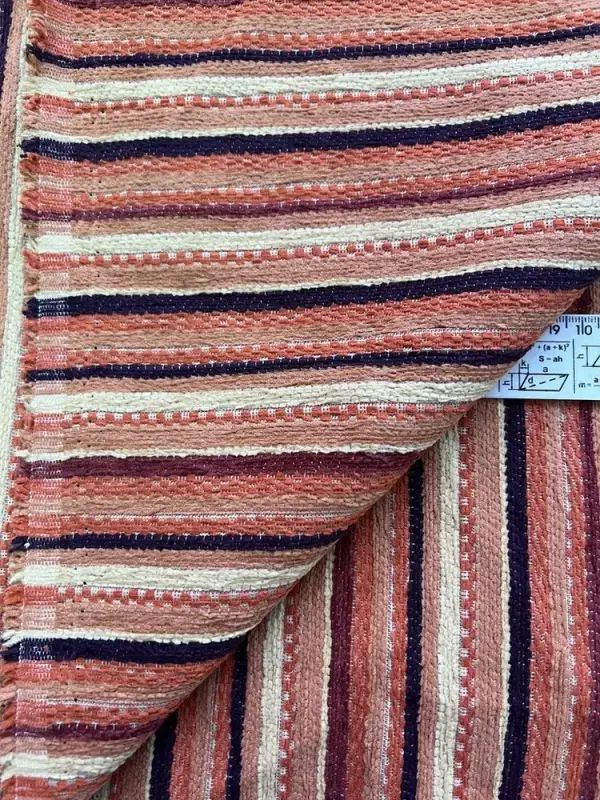
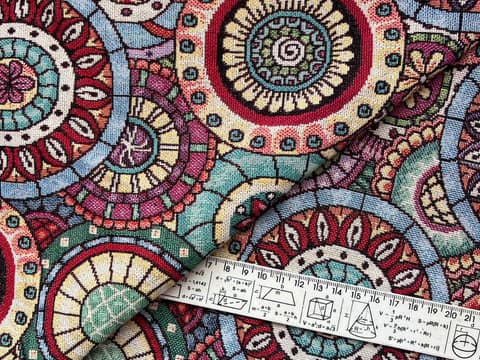
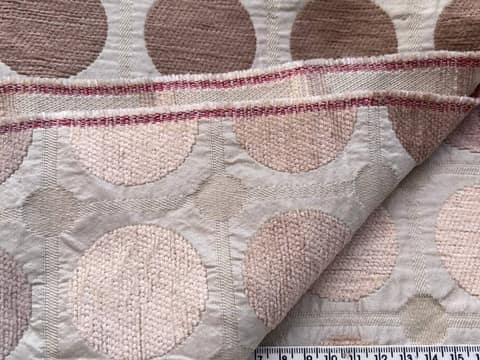
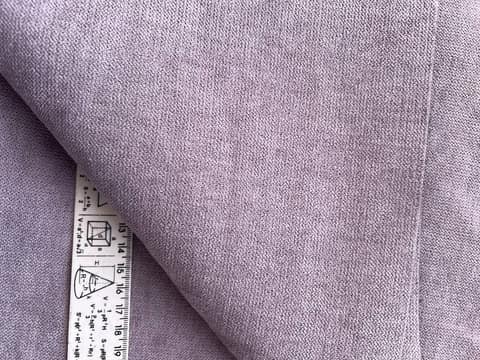
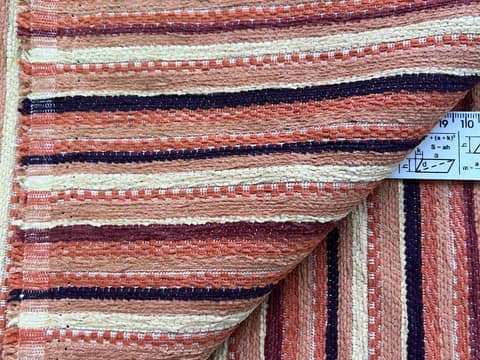
Proper upholstery fabrics work best: they are dense, stand up to rubbing and do not stretch. We have such fabrics at times, including dense, bright IKEA upholstery fabrics.
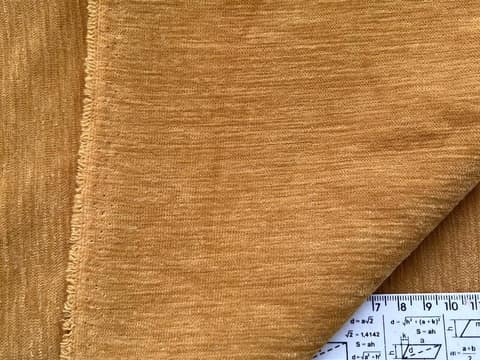
Dense cotton (twill, denim, canvas), faux suede and corduroy work too: they are pleasant to sit on, and cotton and suede are easy to clean.
Do not use wool on a seat: it itches, and constant rubbing felts it and wears it through. Thin, slippery and knit fabrics do not work either: they stretch and tear quickly.

Step by step
Undo the screws underneath and take the seat off. Remove the old fabric by pulling out the staples, and check the foam.
Lay the fabric face down, the foam and the seat on top. Put one staple in the centre of each side, stretching the fabric crosswise: front, back, left, right.
Then work from the centres to the corners, stapling every 2 to 3 cm and stretching the fabric evenly. Fold the corners in one neat pleat or two, like an envelope, staple and trim the excess.
Screw the seat back on. Check stripes and checks before the first staples: they should run parallel to the edge.
Sources
Facts checked against these pages. The text is our own.
Updated 19 October 2026
Questions
How much fabric does one chair need?
A 40 × 40 cm seat with 4 cm foam needs a square of about 62 × 62 cm. Four chairs at 1.45 m wide take about 1.25 m.
What is the best fabric for chairs?
A proper upholstery fabric, or dense cotton, faux suede or corduroy. Wool itches and wears through, thin and knit fabrics tear quickly.
Can I reupholster a chair without an upholstery stapler?
You can tack the fabric with small upholstery nails, but a stapler is faster and neater. Use 6 to 8 mm staples.
Upholstery fabrics in the shop now
See all- NewБавовна меблеваМеблева · A00500.90 m × 1.00 m · 100 UAH/m100 UAHfor the whole piece
- Синтетика меблеваМеблева · A002561.50 m × 2.30 m · 150 UAH/m345 UAHfor the whole piece
- Синтетика меблеваМеблева · A002361.40 m × 2.00 m · 150 UAH/m300 UAHfor the whole piece
- Синтетика меблеваМеблева · A002261.45 m × 2.95 m · 150 UAH/m443 UAHfor the whole piece
- Бавовна з домішками меблеваМеблева · A0018161.45 m × 3.00 m · 150 UAH/m450 UAHfor the whole piece





How to reupholster a chair yourself
See every piece in stock, or call us if you would like advice.