About fabrics
Viscose
A light fabric that breathes and falls in soft folds. It is made from cellulose, so it feels closer to cotton than to synthetics. Here is how to work with it.

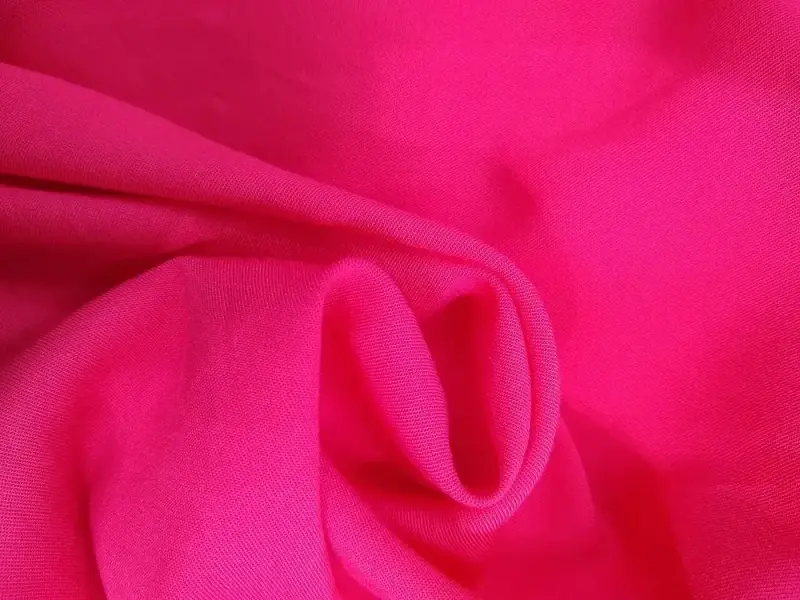
- From celluloseman-made but not synthetic
- Can shrinkwash it before cutting
- 30 °Cgentle wash
- 2–3 mfor a dress at 1.4–1.5 m wide
What viscose is made of
Viscose was invented at the end of the 19th century as a cheaper substitute for silk. It is made from cellulose, mostly from wood: the cellulose is dissolved and fine threads are drawn from the solution.
So viscose is not a synthetic like polyester, but a man-made fibre from a natural raw material. It feels cool and smooth, breathes and absorbs moisture well. Newer kinds of the same fibre are called modal and lyocell: they are stronger and shrink less.
Pros and cons
Pros: light, breathable, free of static, drapes beautifully and keeps bright colours. It is not hot in summer.
Cons: it creases more than cotton and gets weaker when wet, so it must not be wrung. It can shrink at the first wash, sometimes noticeably.
Kinds of viscose fabric
Plain viscose: a simple light plain-weave cloth for summer dresses, shirts and pyjamas.
Challis, crepe, viscose satin: softer and more fluid, for draped dresses, blouses and circle skirts.
Viscose is often blended with polyester, elastane or linen: such cloth creases less or gives a little.
Cutting and sewing
Viscose slips, so it is easier to cut on paper or on a cotton sheet, pinning the pieces more often. Use sharp scissors and a fine needle.
Viscose edges fray: finish them with an overlocker, a zigzag or French seams. How much fabric a dress, blouse or skirt takes is in the articles on dresses, shirts and skirts.
Care
Before cutting, wash the viscose the way you will wash the garment, and dry it: it shrinks now rather than in the dress.
Wash at 30 °C on a gentle cycle or by hand, do not wring, dry flat or on a hanger. Iron slightly damp, inside out, at a medium setting.
Sources
Facts checked against these pages. The text is our own.
Updated 19 October 2026
Questions
Is viscose synthetic?
No. Viscose is made from cellulose, mostly from wood, so it is a man-made fibre from a natural raw material. It breathes and absorbs moisture like cotton.
Does viscose shrink after washing?
Yes, it can, especially at the first wash. So wash and dry the fabric before cutting.
Which is better for summer: viscose or cotton?
Both breathe. Viscose is lighter, cooler and drapes better, cotton is stronger and creases less.
Fabrics for dresses and blouses in the shop now
See allNo such pieces right now, but new ones arrive every week.
- NewCotton dress fabricСукняна · A004441.20 m × 2.95 m · 100 UAH/m295 UAHfor the whole piece
- NewCotton dress fabricСукняна · A004230.80 m × 1.80 m · 70 UAH/m126 UAHfor the whole piece
- NewCotton dress fabricСукняна · A004110.90 m × 4.30 m · 70 UAH/m301 UAHfor the whole piece
- Cotton blend suitingКостюмна · A002981.55 m × 1.25 m · 150 UAH/m188 UAHfor the whole piece
- Cotton blend suitingКостюмна · A002761.50 m × 2.25 m · 150 UAH/m338 UAHfor the whole piece
- PopularCotton suitingКостюмна · A0017170.72 m × 2.15 m · 70 UAH/m151 UAHfor the whole piece
- PopularCotton blend suitingКостюмна · A001351.55 m × 1.90 m · 150 UAH/m285 UAHfor the whole piece
- Wool suitingКостюмна · A001261.60 m × 1.00 m · 300 UAH/m300 UAHfor the whole piece








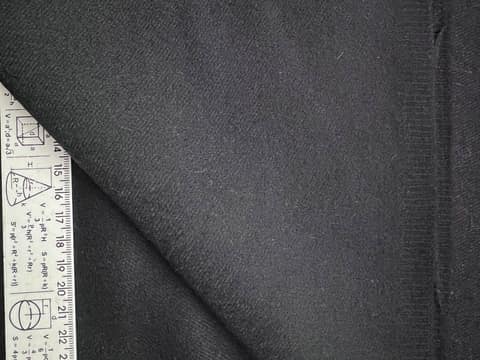
Viscose
See every piece in stock, or call us if you would like advice.