About fabrics
Linen
One of the oldest fabrics: strong, cool and pleasant in the heat. Here is what it is made of, what kinds there are and how to work with it.

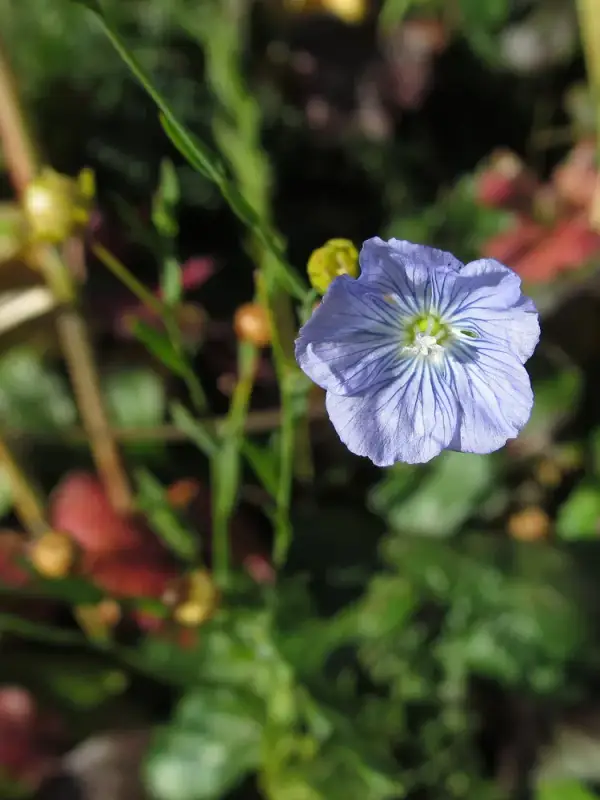
- Naturalfibre from the flax stem
- 3–5 %can shrink, sometimes more
- 40 °Cusual wash
- 1.5–2 mfor a shirt at 1.4–1.5 m wide
What linen is made of
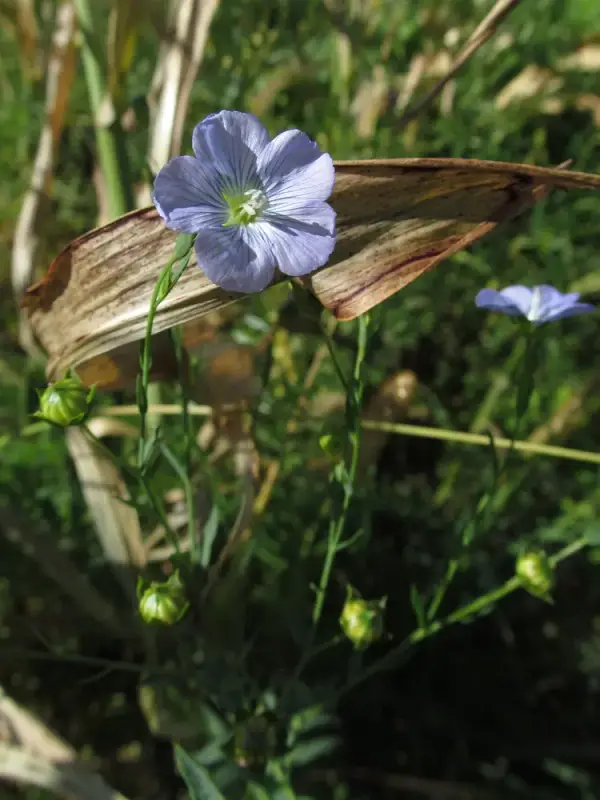
Linen is made from the fibres of the stem of flax. The stems are retted, broken and combed to free the long strong fibres, which are then spun into yarn.
Linen was woven in ancient Egypt, and in Ukraine shirts and embroidered towels have long been made of it. It is one of the strongest natural fabrics: wet linen is even stronger.

Pros and cons
Pros: very strong, cool to the touch, absorbs moisture fast and dries fast, so it is comfortable in the heat. It gets softer with every wash.
Cons: it creases a lot and can shrink, especially at the first wash. New linen can feel a little stiff.
Kinds of linen fabric
Shirting linen: fine and light, for shirts, dresses and blouses. Suiting linen: denser, for trousers, jackets and skirts.
Unbleached linen has a natural grey-beige colour, bleached and dyed linen comes in any colour.
Half linen is linen with cotton: softer and less prone to creasing. Linen with viscose is more fluid, with elastane it gives a little.
How much fabric you need
Care
Before cutting, always wash and dry the linen, ideally at the same temperature as the finished garment.
Wash at 40 °C, white linen hotter, colours separately. Iron slightly damp on a high setting, dark linen inside out so it does not shine. Linen creases are seen as part of its character rather than a flaw.
Sources
Facts checked against these pages. The text is our own.
Updated 19 October 2026
Questions
How is linen different from cotton?
Both are natural and breathe. Linen is stronger, cooler and dries faster, but creases more. Cotton is softer and creases less.
Does linen shrink after washing?
Yes, usually by 3 to 5 %, loosely woven linen sometimes more. So wash the fabric before cutting.
How do I make linen crease less?
Choose half linen or linen with viscose or polyester. Pure linen always creases, but it softens over time.
Cotton, which breathes too, in the shop now
See allNo such pieces right now, but new ones arrive every week.
- Cotton blend suitingКостюмна · A002981.55 m × 1.25 m · 150 UAH/m188 UAHfor the whole piece
- Cotton blend suitingКостюмна · A002761.50 m × 2.25 m · 150 UAH/m338 UAHfor the whole piece
- PopularCotton suitingКостюмна · A0017170.72 m × 2.15 m · 70 UAH/m151 UAHfor the whole piece
- PopularStretch cotton suitingКостюмна · A0015121.40 m × 1.50 m · 150 UAH/m225 UAHfor the whole piece
- PopularCotton blend suitingКостюмна · A001351.55 m × 1.90 m · 150 UAH/m285 UAHfor the whole piece
- PopularCotton blend suitingКостюмна · A000231.60 m × 1.00 m · 200 UAH/m200 UAHfor the whole piece






Linen
See every piece in stock, or call us if you would like advice.