About fabrics
Twill and gabardine
Twill is a weave with a diagonal rib, and gabardine is its densest kind. Here is how to recognise them and why they make such good trousers and suits.

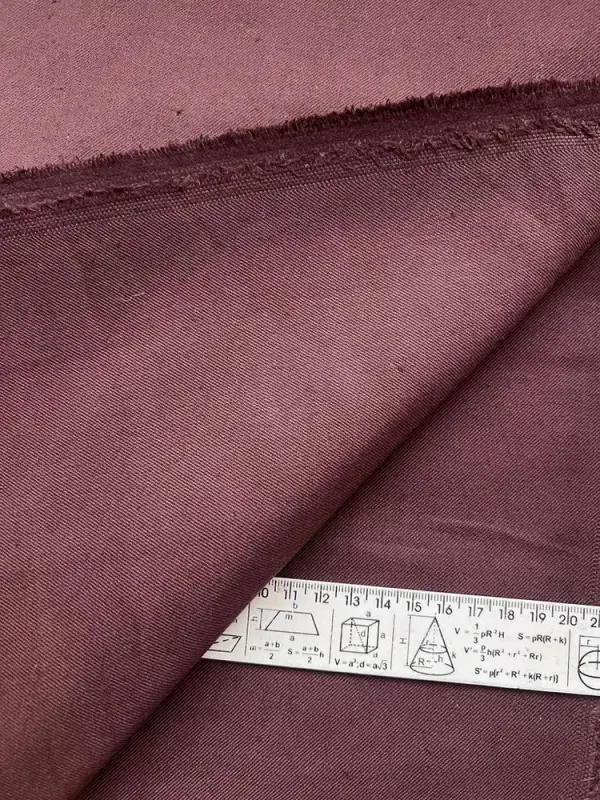
- Diagonalthe mark of twill
- Gabardinedense twill with a steep rib
- Wool and cottonthe main materials
- Holds a creasewhich is why it suits trousers
What twill is
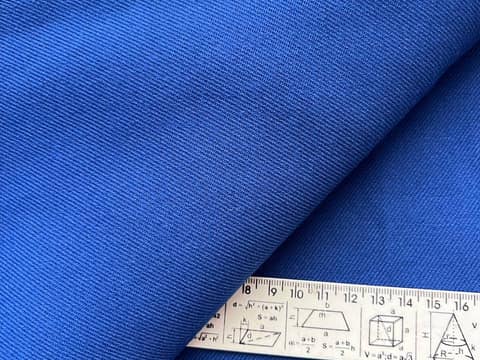
Twill is not a material but a way of weaving. Each next thread shifts by one, and the cloth shows slanted ribs running on the diagonal.
Compared with a plain weave, where threads simply alternate, twill is softer, drapes better, is denser and creases less. Wool, cotton and blends all come as twill.
Kinds of twill
Cotton twill: for trousers, chinos, shirt jackets and workwear. Denim, which jeans are made of, is a cotton twill too.
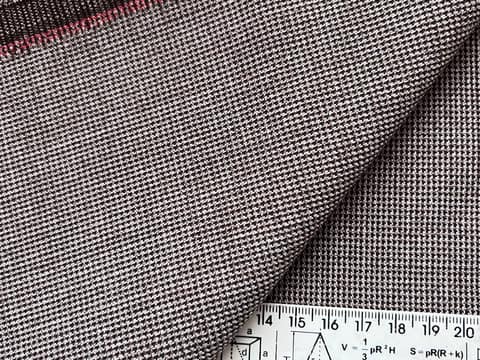
Wool twill: the classic for suits, trousers and skirts. Herringbone is a «broken» twill whose diagonal changes direction.
What gabardine is
Gabardine is a very dense twill with a sharp, steep rib. It was invented at the end of the 19th century as a cloth that keeps out rain and wind, and raincoats are still made of it.
Gabardine comes in wool and cotton. It holds its shape, hardly creases and keeps a trouser crease, which makes it one of the best fabrics for trousers, suits and coats.
How to recognise them
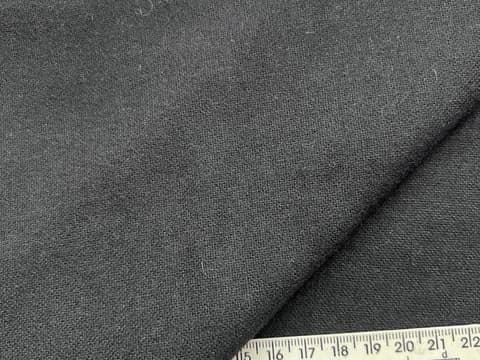
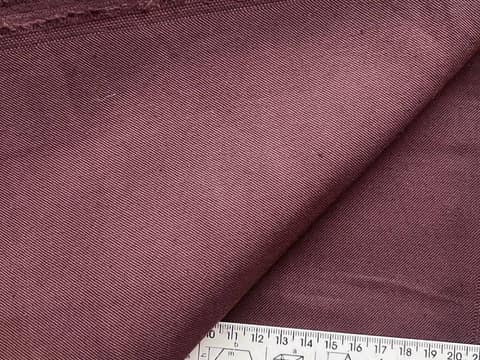
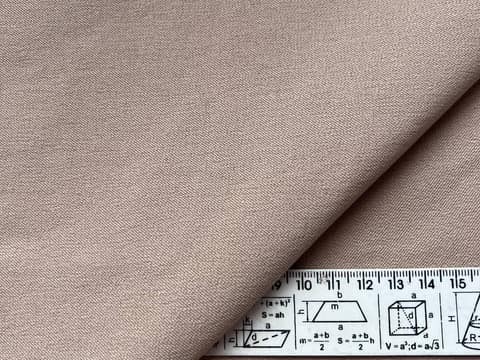
Look at the cloth in the light: twill shows slanted ribs. On the wrong side they are fainter or run the other way.
Gabardine has fine, dense, steep ribs, and the cloth is smooth and springy. Ordinary twill has a gentler, softer rib.
Care and sewing
Sources
Facts checked against these pages. The text is our own.
Updated 19 October 2026
Questions
How is twill different from gabardine?
Twill is a weave with a diagonal rib. Gabardine is its densest kind with a fine steep rib: smoother, springier and less prone to creasing.
Does gabardine crease?
Very little. It holds its shape and a crease, which is why trousers, suits and raincoats are made of it.
Is denim a twill?
Yes, denim is a dense cotton twill with a dyed warp and a white weft.
Suiting fabrics in the shop now
See all- Cotton blend suitingКостюмна · A002981.55 m × 1.25 m · 150 UAH/m188 UAHfor the whole piece
- Cotton blend suitingКостюмна · A002761.50 m × 2.25 m · 150 UAH/m338 UAHfor the whole piece
- Wool blend suitingКостюмна · A002651.65 m × 3.00 m · 250 UAH/m750 UAHfor the whole piece
- PopularWool blend suitingКостюмна · A0020211.55 m × 1.75 m · 200 UAH/m350 UAHfor the whole piece
- PopularCotton suitingКостюмна · A0017170.72 m × 2.15 m · 70 UAH/m151 UAHfor the whole piece
- PopularStretch cotton suitingКостюмна · A0015121.40 m × 1.50 m · 150 UAH/m225 UAHfor the whole piece
- Wool blend suitingКостюмна · A0014121.50 m × 1.10 m · 200 UAH/m220 UAHfor the whole piece
- PopularCotton blend suitingКостюмна · A001351.55 m × 1.90 m · 150 UAH/m285 UAHfor the whole piece








Twill and gabardine
See every piece in stock, or call us if you would like advice.