About fabrics
Tweed
A rough, warm wool cloth from Scotland with flecks of coloured yarn. Here is how tweed differs from other wool and what to make with it.

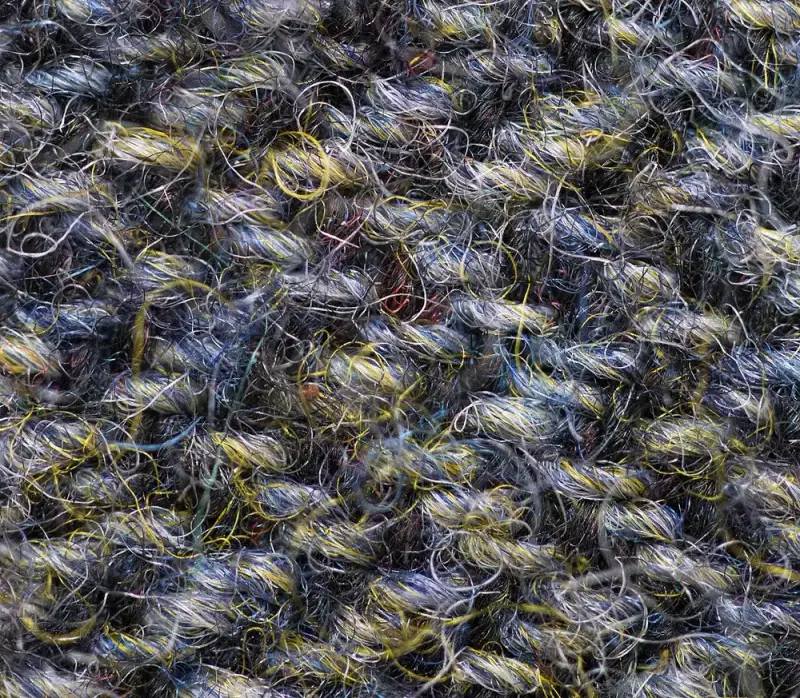
- Scotlandwhere the cloth comes from
- Wooloften of many-coloured yarns
- Herringbone and checkthe best-known patterns
- Brush and dry cleanthe main care
What tweed is
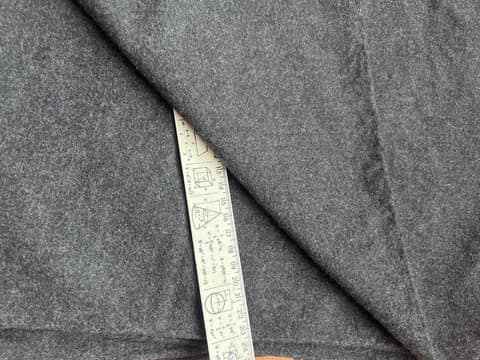
Tweed is a dense wool cloth woven in Scotland and Ireland for centuries. Its yarn mixes fibres of different colours, so the cloth looks alive: in grey or brown you see specks of blue, red, green or yellow.
The name is said to come from a mistake: a London merchant read the Scottish word tweel (twill) as Tweed, the river near which the cloth was woven.
Harris tweed
The most famous tweed, Harris tweed, is handwoven on the islands of the Outer Hebrides in Scotland from local wool. Its name is protected by law, and every length carries the orb mark.
It is rougher and denser than ordinary tweed, very warm and long-lasting. Similar mill-made cloths are called tweed too.
Patterns
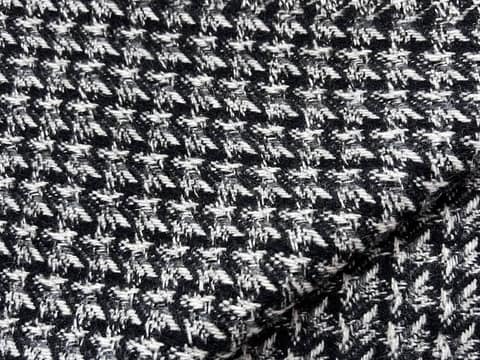
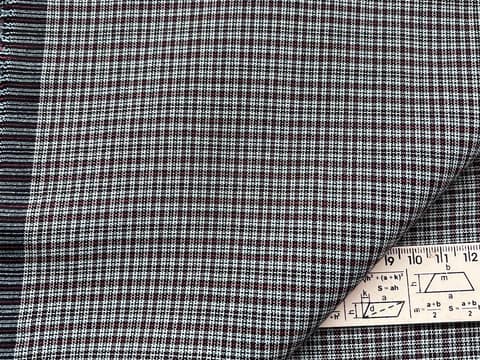
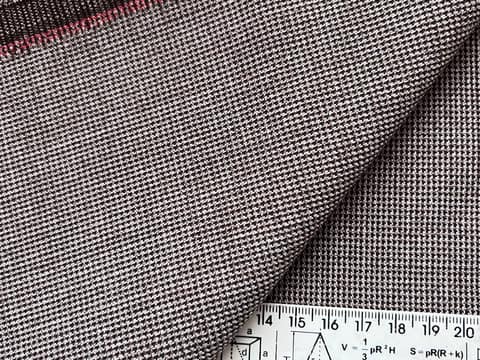
Tweed most often comes as plain melange, herringbone, check or houndstooth. The pattern comes from a twill weave of two colours of yarn.
Checked tweed should be cut with extra to match the pattern: how to do it is in the article «How to cut checked fabric».

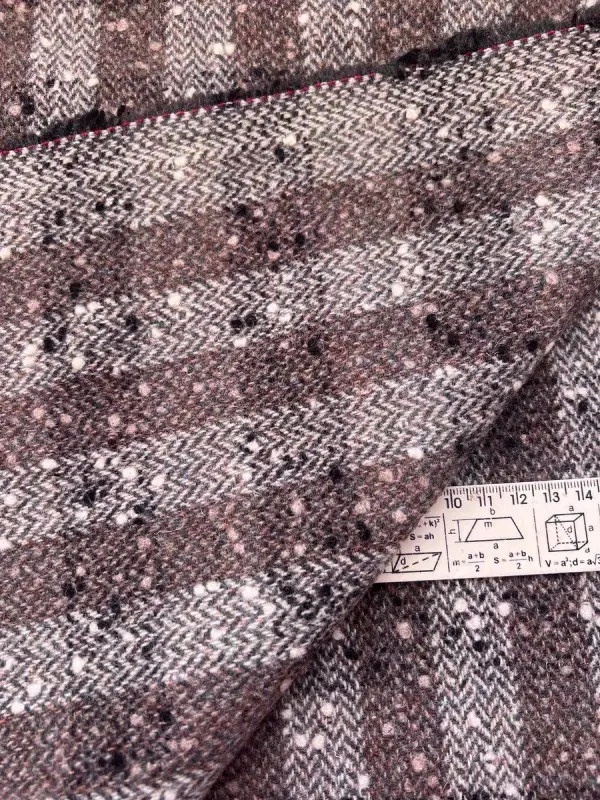
What to make with tweed
Care
Before cutting, decatise tweed with steam. Brush and air finished garments, and dry clean them.
Do not machine wash tweed: hot water and rubbing felt the wool. Treat stains locally.
Sources
Facts checked against these pages. The text is our own.
Updated 19 October 2026
Questions
How is tweed different from ordinary wool?
Tweed is rougher and denser, and its yarn mixes fibres of different colours, so the cloth shows coloured specks.
Does tweed itch?
Often, especially dense tweed. That is why tweed jackets and coats are lined.
What is Harris tweed?
Tweed handwoven on the islands of the Outer Hebrides in Scotland. Its name is protected by law.
Wool in the shop now
See all- NewWool blend dress fabricСукняна · A00491.55 m × 1.15 m · 200 UAH/m230 UAHfor the whole piece
- NewWool blend jerseyТрикотаж · A00471.50 m × 1.55 m · 200 UAH/m310 UAHfor the whole piece
- Wool coat-suitingПальтово-костюмна · A003111.40 m × 2.00 m · 300 UAH/m600 UAHfor the whole piece
- Wool coatingПальтова · A002871.60 m × 0.80 m · 400 UAH/m320 UAHfor the whole piece
- Wool blend suitingКостюмна · A002651.65 m × 3.00 m · 250 UAH/m750 UAHfor the whole piece
- PopularWool blend suitingКостюмна · A0020211.55 m × 1.75 m · 200 UAH/m350 UAHfor the whole piece
- Wool coatingПальтова · A0019171.60 m × 1.00 m · 400 UAH/m400 UAHfor the whole piece
- Wool blend suitingКостюмна · A0014121.50 m × 1.10 m · 200 UAH/m220 UAHfor the whole piece








Tweed
See every piece in stock, or call us if you would like advice.