About fabrics
Knit fabric
Knits are not woven but looped, so they stretch and follow the body. Here are the kinds and how to sew knits so the seams do not snap.

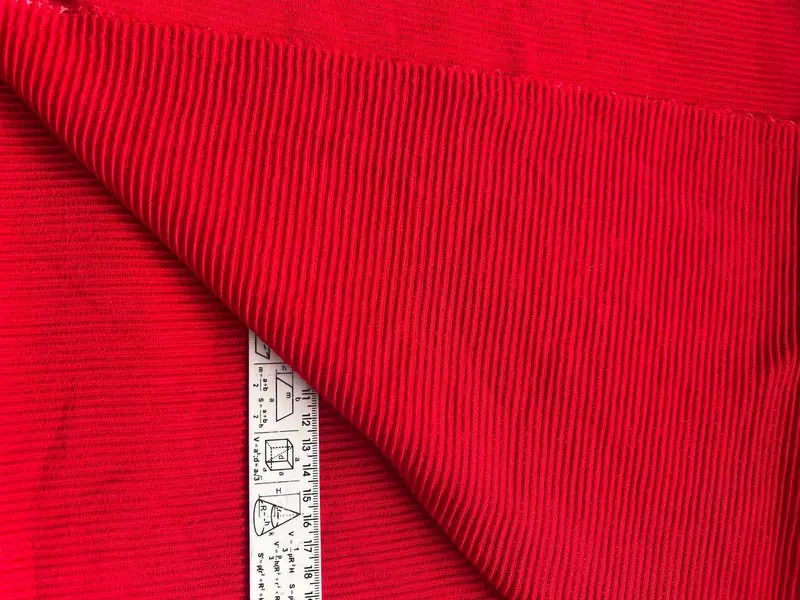
- Loopsknits are looped, not woven
- Stretchesmost of all across
- Zigzagor overlock instead of a straight seam
- 30 °Cgentle wash
What knit fabric is
Knit fabric is made of loops linked to each other, as in a sweater, only very small. In a woven cloth threads cross at right angles and do not stretch, while loops stretch every way.
That is why knits are comfortable, do not crease and fit the body well. They are knitted from cotton, viscose, wool and synthetics, often with elastane.
Kinds of knit
Jersey: a thin smooth knit, as in T-shirts. The face shows little braids, the back tiny loops.
Rib knit: knit in ribs, as in the photo above, very stretchy. It goes into cuffs, collars, fitted dresses and tops.
Interlock: two-layered, the same on both sides, denser, and its edge does not curl. Sweatshirt fleece: brushed or looped on the back, warm, for sweatshirts and hoodies.
Cutting
Find which way the knit stretches most: usually across. Lay the pieces so the greatest stretch goes around the body.
Do not pull the fabric while cutting: it should lie loose. Cut with sharp scissors or a rotary cutter.
Sewing
Use a jersey or stretch needle: it slips between the loops rather than piercing them. A straight seam on a knit snaps, so sew with a narrow zigzag, a stretch stitch or an overlocker.
Do not pull the knit under the foot, or the seam will ripple. If the fabric still stretches, a walking foot helps.
Care
Wash at 30 °C, synthetic and viscose knits on a gentle cycle. Dry flat: on a hanger knits stretch.
Iron on the wrong side at a low or medium setting, synthetics especially. More on synthetic fibres in «Polyester».
Sources
Facts checked against these pages. The text is our own.
Updated 19 October 2026
Questions
How is knit fabric different from woven fabric?
Woven fabric is made of threads crossing at right angles, knit fabric of loops. That is why knits stretch and fit the body.
Which needle do I use for knits?
A jersey or stretch needle with a rounded point. It slips between the loops rather than piercing them.
Why does the seam on a knit snap?
A straight seam does not stretch with the fabric. Sew with a zigzag, a stretch stitch or an overlocker.
Knits in the shop now
See all
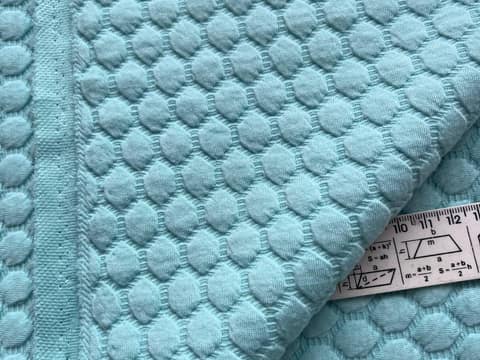

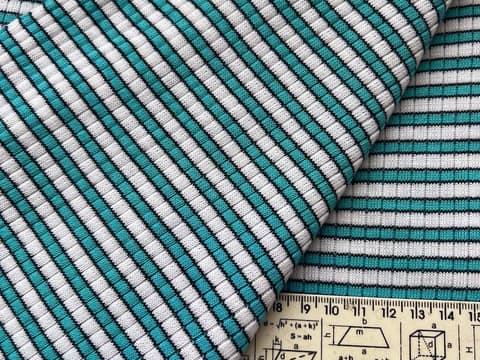

Knit fabric
See every piece in stock, or call us if you would like advice.