About fabrics
How much fabric a dress takes
A plain sleeveless dress often needs only 1 to 1.3 m, a full-skirted one 2.5 m or more. Here is how to work it out for your style.

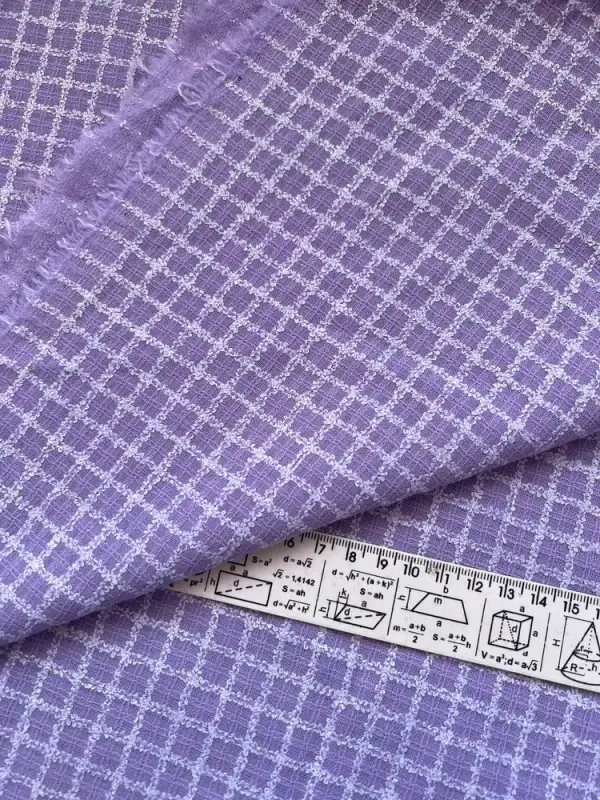
- 1 length + sleevea simple formula for a straight dress
- 1–1.3 mfor a sleeveless sheath
- 2.5–4 mfor a circle-skirt dress
- 1.4–1.5 musual fabric width
Working it out yourself
For a straight or fitted dress from fabric 1.4 to 1.5 m wide: one dress length plus the sleeve length plus 10 to 15 cm for hems. This works when the front and back fit side by side across the fabric, usually up to about 100 to 105 cm around the hips.
For wider hips or a style that flares, count two dress lengths plus the sleeve. Measure the length from the highest point of the shoulder to the hem.
An example: a dress 100 cm long with a 25 cm sleeve. 100 + 25 + 15 = 140 cm, that is 1.4 m.
Roughly, by style
For fabric 1.4 to 1.5 m wide and sizes EU 38 to 44:
A sleeveless sheath to the knee: 1 to 1.3 m.
A straight dress with short sleeves: 1.3 to 1.6 m, with long sleeves 1.6 to 2 m.
A trapeze or A-line: 1.8 to 2.5 m.
With a half-circle skirt: 2.5 to 3 m, a full circle: 3 to 4 m. A knee-length shirt dress: 2 to 2.5 m.
Which fabric to choose
For a sheath or a formal dress choose a dense cloth that holds its shape: suiting wool or cotton suiting (see cotton).
Soft dress wool and viscose drape well: they suit draped, wrap or full-skirted dresses. For summer dresses take light cotton or linen.
See what is in stock: dress fabrics and suiting. Dress wool has its own article.
When you need extra
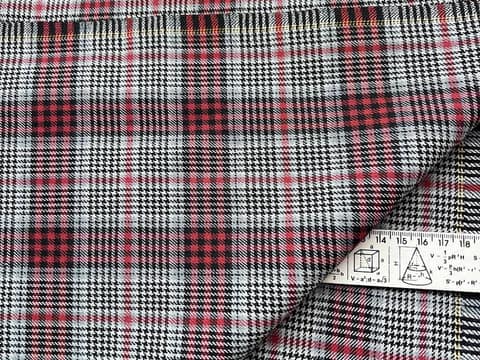
Checks and stripes: the pattern is matched at the side seams and the waist, add 10 to 20 %.
Bias cut: pieces are laid at 45°, which takes noticeably more fabric, 30 to 50 % more.
Cotton, viscose and linen can shrink at the first wash: wash the fabric before cutting and allow 5 % extra.
Sources
Facts checked against these pages. The text is our own.
Updated 19 October 2026
Questions
How much fabric does a simple dress take?
A straight sleeveless knee-length dress at 1.4 to 1.5 m wide usually takes 1 to 1.3 m. Add the sleeve length for sleeves.
Is 2 m enough for a dress with sleeves?
For a straight or fitted dress with long sleeves, yes, up to about EU 44. For a full-skirted dress two metres are not enough.
How much fabric for a dress in a larger size?
Count two dress lengths plus the sleeve: for a knee-length dress with sleeves that is about 2.3 to 2.8 m at 1.5 m wide.
Dress fabrics in the shop now
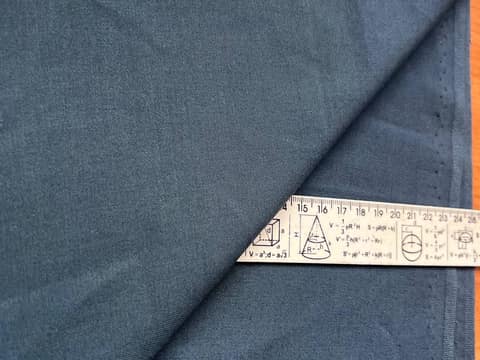
See all- NewWool blend dress fabricСукняна · A00491.55 m × 1.15 m · 200 UAH/m230 UAHfor the whole piece
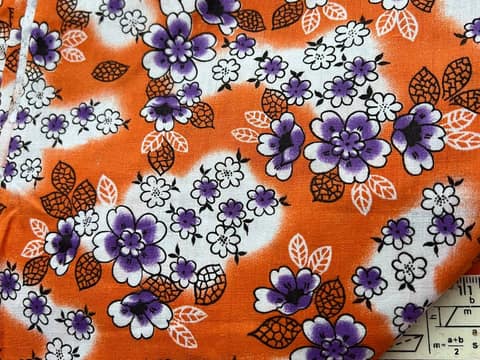
- NewCotton dress fabricСукняна · A004431.20 m × 2.95 m · 100 UAH/m295 UAHfor the whole piece
- NewCotton dress fabricСукняна · A004230.80 m × 1.80 m · 70 UAH/m126 UAHfor the whole piece
- NewCotton dress fabricСукняна · A004110.90 m × 4.30 m · 70 UAH/m301 UAHfor the whole piece
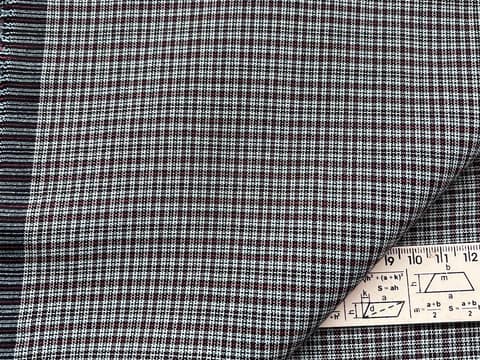
- Cotton blend suitingКостюмна · A002981.55 m × 1.25 m · 150 UAH/m188 UAHfor the whole piece
- Cotton blend suitingКостюмна · A002761.50 m × 2.25 m · 150 UAH/m338 UAHfor the whole piece
- Wool blend suitingКостюмна · A002651.65 m × 3.00 m · 250 UAH/m750 UAHfor the whole piece
- PopularWool blend suitingКостюмна · A0020211.55 m × 1.75 m · 200 UAH/m350 UAHfor the whole piece








How much fabric a dress takes
See every piece in stock, or call us if you would like advice.