About fabrics
How to tell wool from synthetics
Four ways, from the simplest to the most reliable: the label, touch, the crease test and the burn test. Here is what each result means and why a blend is not always bad.

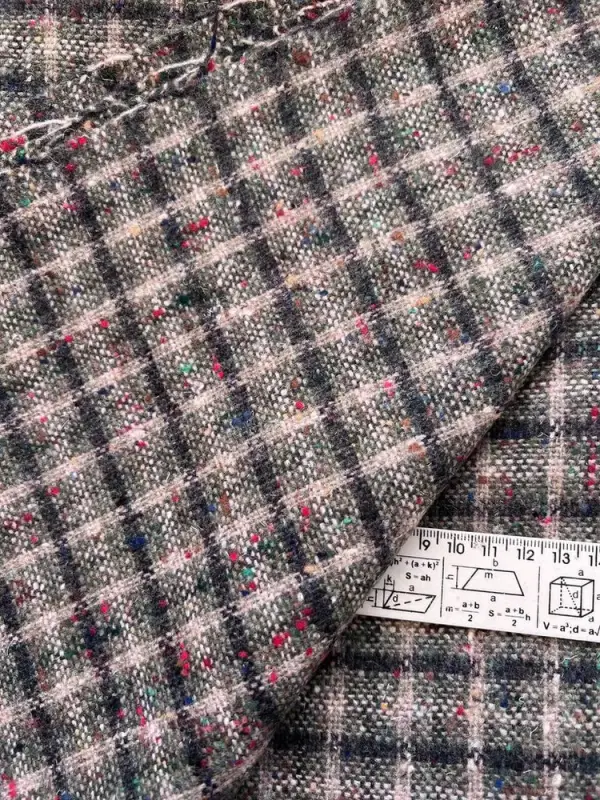
- WO, WVwool on a label
- PES, PAN, PApolyester, acrylic, polyamide
- Ashwhat wool leaves after burning
- A hard beadwhat synthetics leave
The label
If there is a content label, start there. Wool is marked WO, new wool WV, cashmere WS. Synthetics: PES or PL is polyester, PAN acrylic, PA polyamide, EL or EA elastane. Viscose is CV or VI, but it is not a synthetic: it is a man-made fibre from cellulose.
Remnants from garment production, like those in our shop, usually come without a label. Then the ways below help.
By touch and look
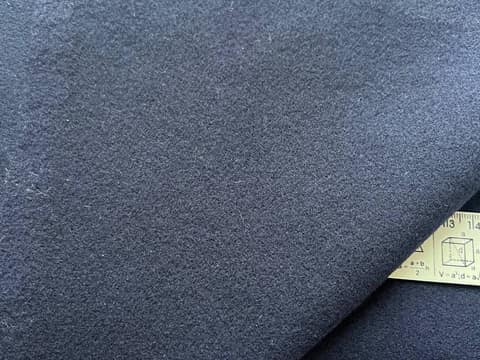
Wool feels warm and warms up quickly in the hand, it is a little springy, and its surface looks matt. Polyester is more often cool and smooth, with a plastic sheen.
The hardest to tell from wool is acrylic: it is soft, light and fluffy too. Acrylic is usually lighter than wool of the same thickness and builds up a lot of static, especially in a dry room.
The crease test
Squeeze a corner of the fabric in your fist for half a minute and let go. Wool springs back almost at once. Cotton, linen and viscose stay creased.
Synthetics hardly crease either, so this test tells wool from plant fibres but not from polyester. For that you need a flame.
The burn test
The most reliable test at home. Take a few threads from the edge of the piece, hold them with tweezers over a sink or a metal bowl and bring them to a flame.
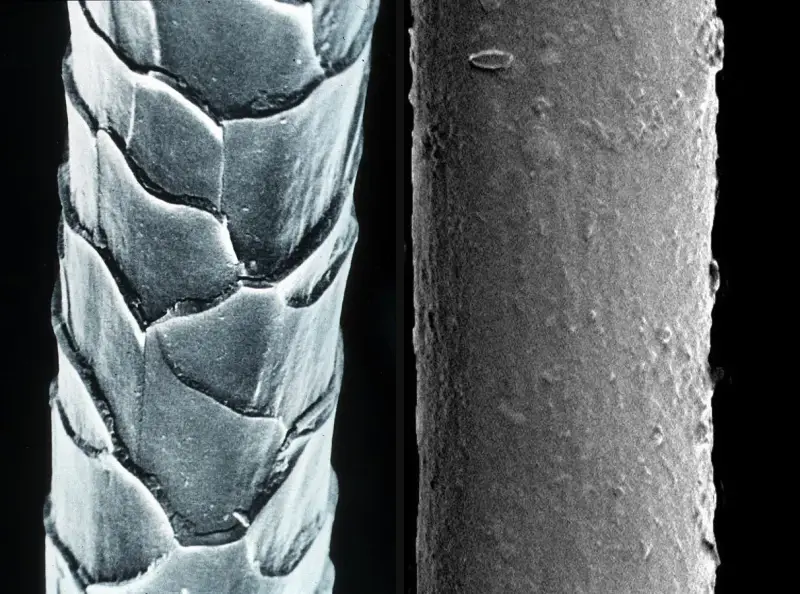
Wool burns reluctantly and goes out by itself once the flame is taken away. It smells of burnt hair and leaves a black brittle ash that crumbles between the fingers. The reason is its make-up: wool is a protein, like hair, with scales on its surface (the photo on the left).
Polyester, acrylic and polyamide melt, may drip, burn with soot and a chemical smell, and leave a hard bead you cannot crush. Cotton and viscose burn fast, smell of burnt paper and leave grey ash.

Ash and beads together
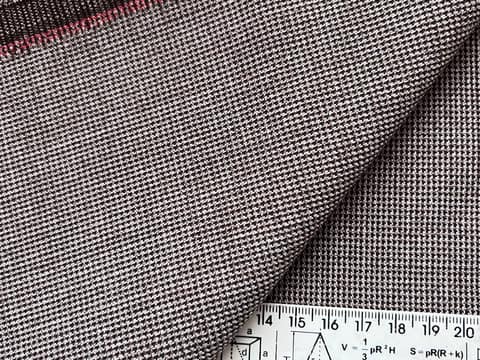
Then it is a wool blend. Wool is most often mixed with polyester or polyamide: the cloth gets stronger, creases and wears less. For an everyday coat or suit that is even a plus.
Such pieces in our shop are called «Wool blend». Which wool suits what is in the articles «Coating wool» and «Suiting wool».
Sources
Facts checked against these pages. The text is our own.
- Wool (Wikipedia)
- Synthetic fiber (Wikipedia)
- Acrylic fiber (Wikipedia)
- Polyester (Wikipedia)
- Polyester photo: CSIRO, CC BY 3.0
Updated 19 October 2026
Questions
How do I tell wool from acrylic?
Most reliably with the burn test: wool leaves brittle ash and smells of burnt hair, acrylic melts into a hard bead. Without a flame, weight helps: acrylic is lighter and builds up more static.
Is it bad if wool contains synthetics?
Not if there is little of it. Polyester or polyamide make the cloth stronger and less prone to creasing. Warmth and looks come from the wool, so mind how much of it there is.
What does «new wool» (WV) mean?
Fibre spun into yarn for the first time, not recycled from old garments. Such wool is softer and stronger than reclaimed wool.
Wool and wool blends in the shop now
See all- NewWool blend dress fabricСукняна · A00491.55 m × 1.15 m · 200 UAH/m230 UAHfor the whole piece
- NewWool blend jerseyТрикотаж · A00471.50 m × 1.55 m · 200 UAH/m310 UAHfor the whole piece
- Wool coat-suitingПальтово-костюмна · A003111.40 m × 2.00 m · 300 UAH/m600 UAHfor the whole piece
- Wool coatingПальтова · A002871.60 m × 0.80 m · 400 UAH/m320 UAHfor the whole piece
- Wool blend suitingКостюмна · A002651.65 m × 3.00 m · 250 UAH/m750 UAHfor the whole piece
- PopularWool blend suitingКостюмна · A0020211.55 m × 1.75 m · 200 UAH/m350 UAHfor the whole piece
- Wool coatingПальтова · A0019171.60 m × 1.00 m · 400 UAH/m400 UAHfor the whole piece
- Wool blend suitingКостюмна · A0014121.50 m × 1.10 m · 200 UAH/m220 UAHfor the whole piece








How to tell wool from synthetics
See every piece in stock, or call us if you would like advice.